

Experienceº Milos, Greece
Make it stand out
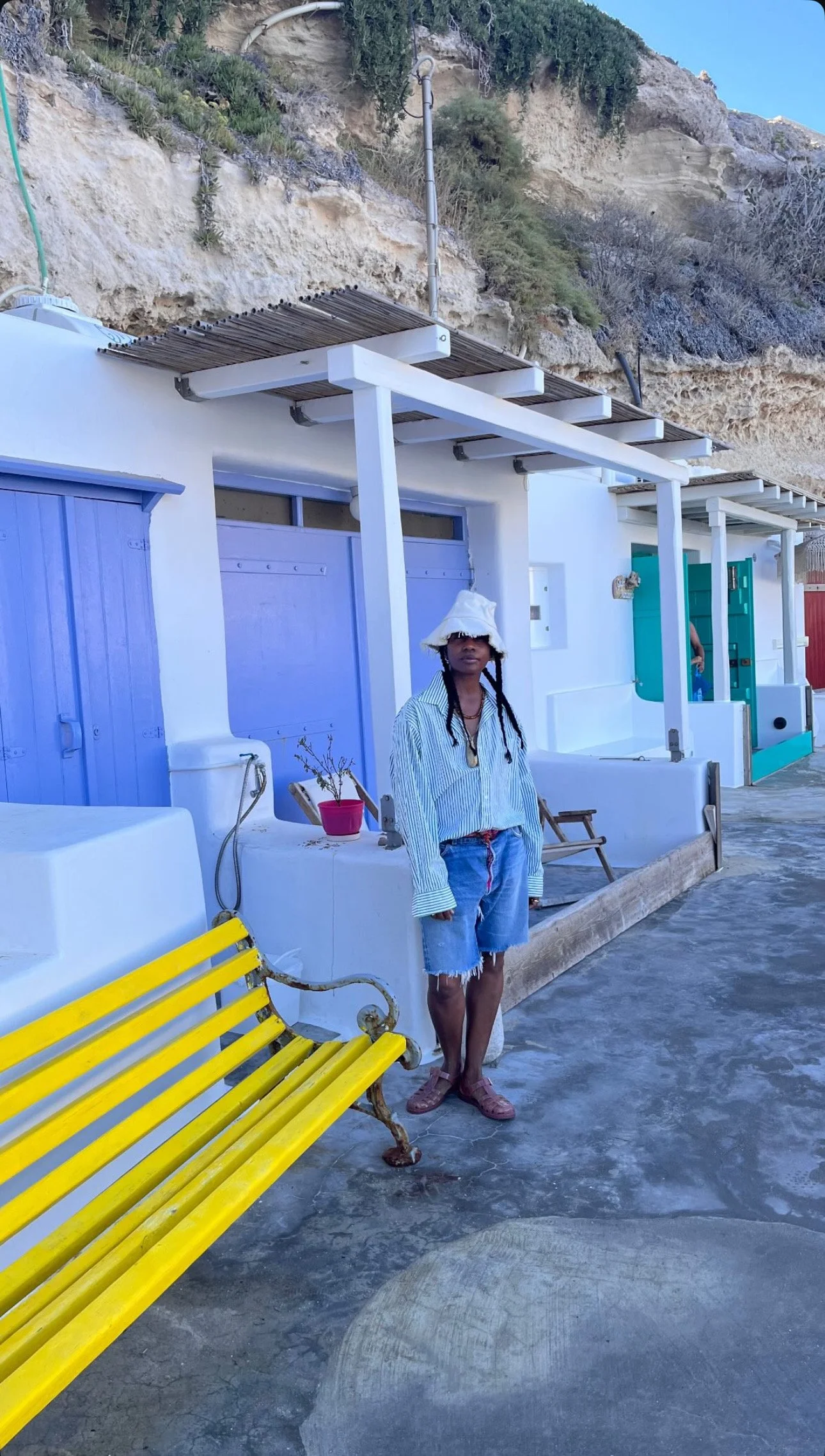
Lorri Sendel in Milos, Greece. Each cave features a brightly painted door of yellow, red, green, pink- creating a color-coded system for fishermen to identify their boats and gear. The interiors are ingeniously simple: half-cave, half-cabin, built to protect boats from weather while doubling as seasonal living quarters.
Fashion Stylist Lorri Sendel on Why Milos, Greece Should Be Your Next Mediterranean Escape
I've known Lorri Sendel through our collaborative work when she and Eric Svec launched After Ski during the pandemic- a project designed to support businesses that needed the warmth of community during New York's coldest months. Since then, Lorri has become a creative collaborator in multiple capacities: styling photoshoots for me, sourcing exceptional vintage furnishings through W.S. Archive, and offering a glimpse into how a commercial editorial fashion stylist translates global travel into visual language. (Sneak peek at her gorgeous home HERE.)
For Lorri, travel isn't simply a form of leisure, it's research. Her journeys across the globe directly inform her creative palette and shape the aesthetic direction of her next shoot. Here, she takes us to her latest trip to Milos, Greece, a destination that immediately moved to the top of my visit list after hearing her account.
What Makes Milos, Greece Different from Other Greek Islands?
Milos is a volcanic Greek island in the Aegean Sea- just north of the Sea of Crete- where ancient cultural heritage meets dramatic natural beauty. This is where the iconic Venus de Milo and Poseidon of Milos sculptures were discovered, making it one of Greece's most historically significant islands.
Beyond its archaeological legacy, Milos offers something visually distinct: striking volcanic formations, crystalline blue waters, and fishing villages that have quietly transformed into design-forward destinations without losing their functional authenticity.
Why Do Creatives Choose Milos for Projects?
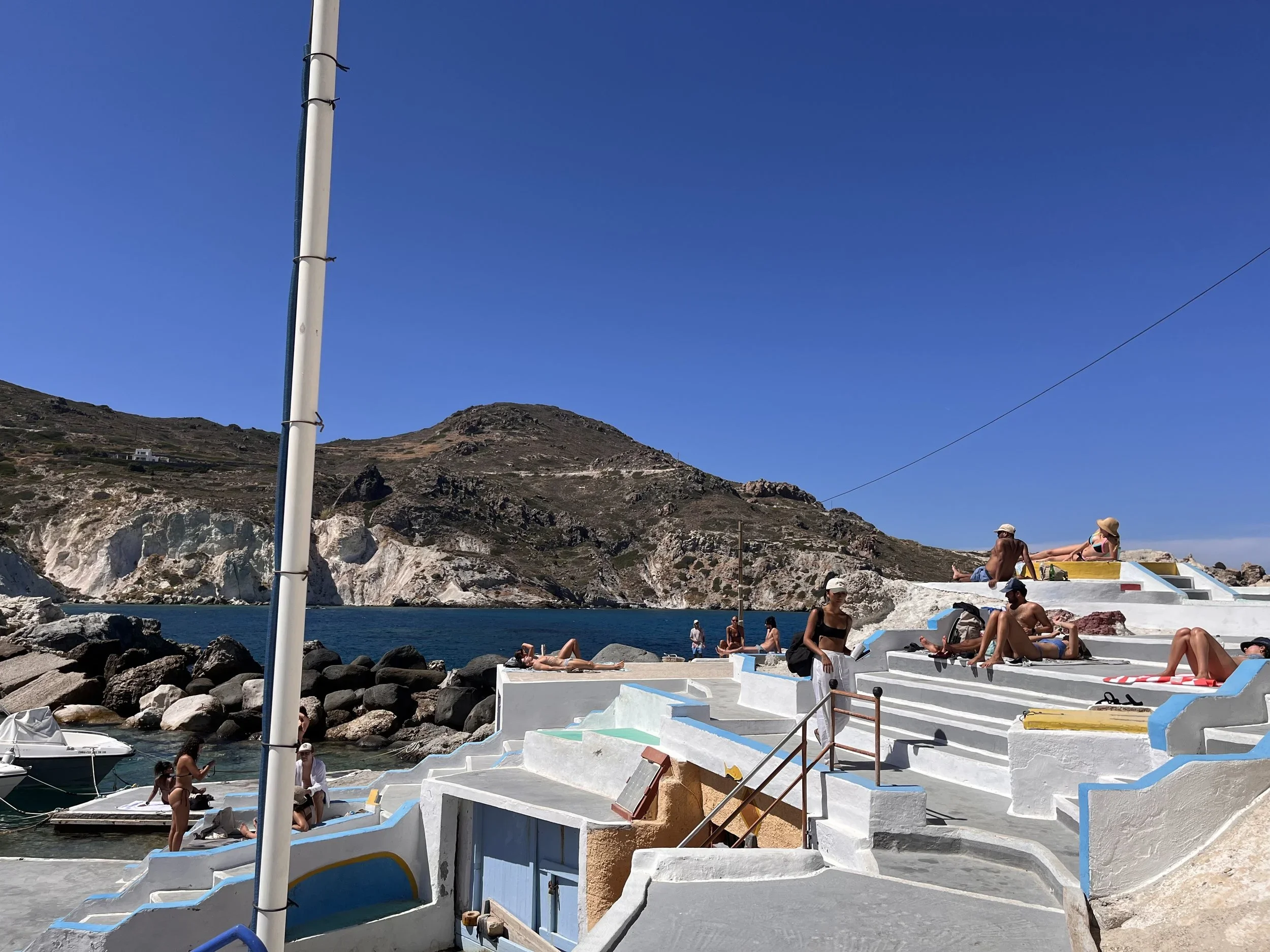
The island's volcanic origins create a landscape unlike anywhere else in the Cyclades. White sand beaches contrast with dramatic rock formations that emerge from turquoise water. The light here is extraordinary—clear, bright, and impossibly flattering for photography.
When you take a boat out, you'll pass natural caves and volcanic cliffs where travelers snorkel and explore hidden coves. The visual composition is constant and requires minimal intervention. As Lorri notes from her shoot: the backdrop does the work for you.
Where to Experience Authentic Milos: The Fishing Villages
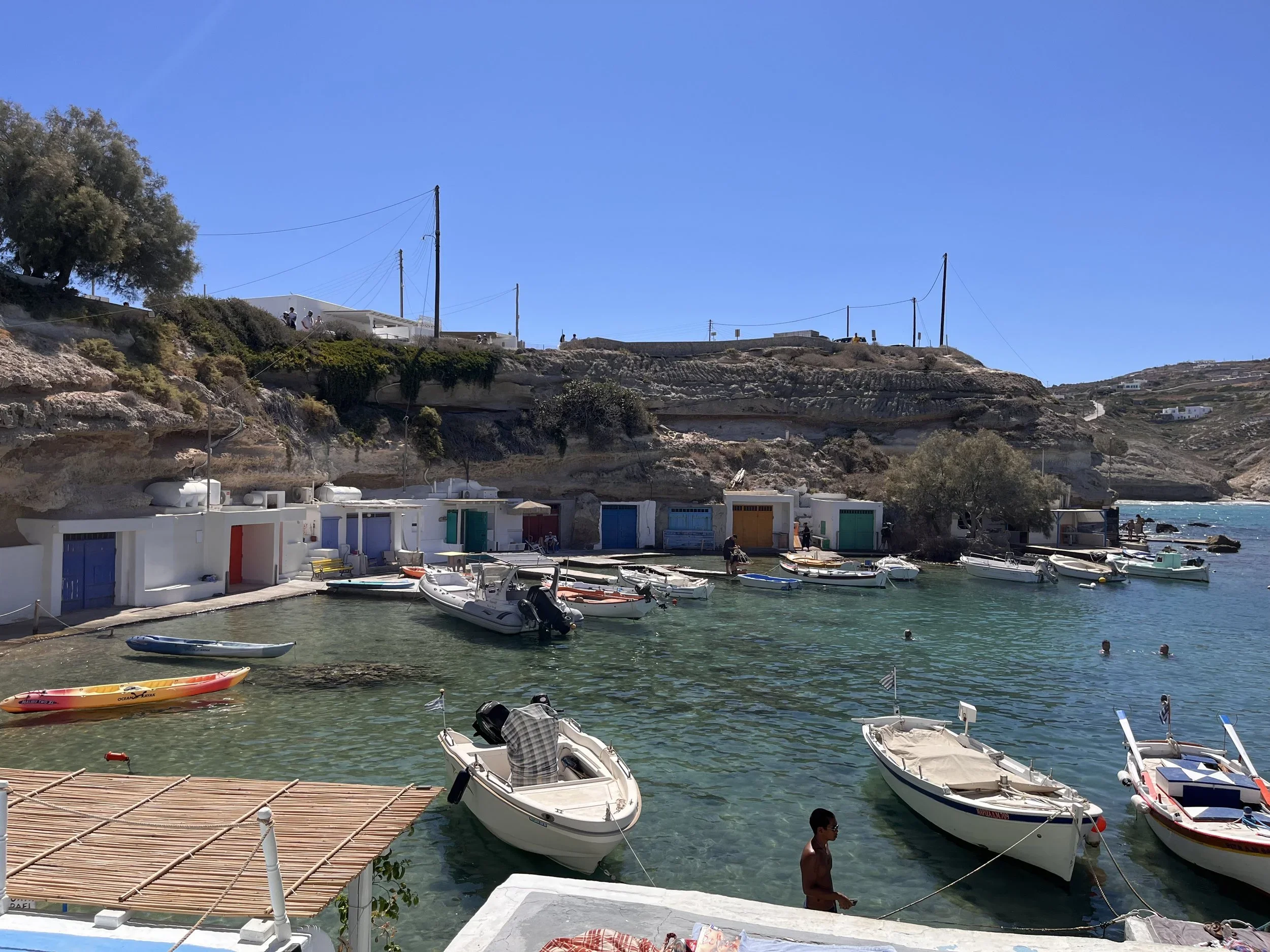
Milos's fishing villages- particularly Klima, Mandrakia, and Firopotamos- are architectural marvels. These aren't just quaint harbor towns; they're functional works of art that demonstrate how utility can evolve into aesthetic without losing integrity.
The Syrmata Houses: Function Meets Form
Traditional fishermen carved boat storage caves (syrmata) directly into the volcanic rock. Each cave features a brightly painted door of yellow, red, green, pink- creating a color-coded system for fishermen to identify their boats and gear. The interiors are ingeniously simple: half-cave, half-cabin, built to protect boats from weather while doubling as seasonal living quarters.
The design wasn't conceived for tourists or the gram. It was simply practical and visually works decades later.
From Working Villages to Cultural Destinations
What was once strictly utilitarian has become highly sought-after. Many syrmata have been converted into boutique Airbnbs, preserving the original structure while adding modern comforts. These spaces offer an immersive way to experience island life—waking up steps from the water, surrounded by hand-painted doors and the rhythmic sounds of fishing boats returning with the morning catch.
During her recent shoot, Lorri used one of these syrmata cottages as a holding station- a space that served as both dressing room and testament to how creative infrastructure can exist within cultural preservation. Small, perfectly functional, and visually arresting.
What Should You Eat in Milos?
Fresh seafood is non-negotiable. End your day at a waterfront taverna where the catch of the day is prepared simply- grilled octopus, sea bream, or calamari dressed in olive oil and lemon. The food is uncomplicated because the ingredients don't need embellishment.
This approach mirrors the island's design philosophy: let quality materials speak for themselves.
How Does Travel Inform Creative Work?
For stylists like Lorri, these journeys are more than leisure- they're visual research that directly influences commercial work. The color palette of Milos (volcanic white, cobalt blue, vibrant painted doors) becomes a reference point for future shoots. The texture of sun-bleached wood against volcanic rock informs material choices. The way Mediterranean light hits surfaces at different times of day shapes lighting decisions back in the studio.
The island's natural composition creates a backdrop that requires no staging. The contrast of raw volcanic texture against meticulously maintained colored facades is both historically authentic and effortlessly photogenic- a combination rarely achieved in contemporary destinations.
Travel Notes: Getting to Milos
By Air: Milos National Airport (MLO) connects to Athens year-round
By Ferry: Regular service from Piraeus (Athens), Santorini, and other Cycladic islands
Best Time to Visit: May–June or September– October for fewer crowds and ideal weather
What to Pack: Sunscreen, underwater camera for snorkeling, comfortable sandals for navigating village steps
Why Milos Belongs on Your Travel List
Milos represents a specific type of destination: one where cultural authenticity hasn't been sacrificed for tourism, where design emerges from function rather than decoration, and where the natural environment provides constant visual inspiration.
For creatives seeking destinations that offer both aesthetic richness and historical depth, Milos delivers on natural curation.